Invite Charu to Speak
Give your room one idea they can act on Monday: healthcare begins before the clinician.
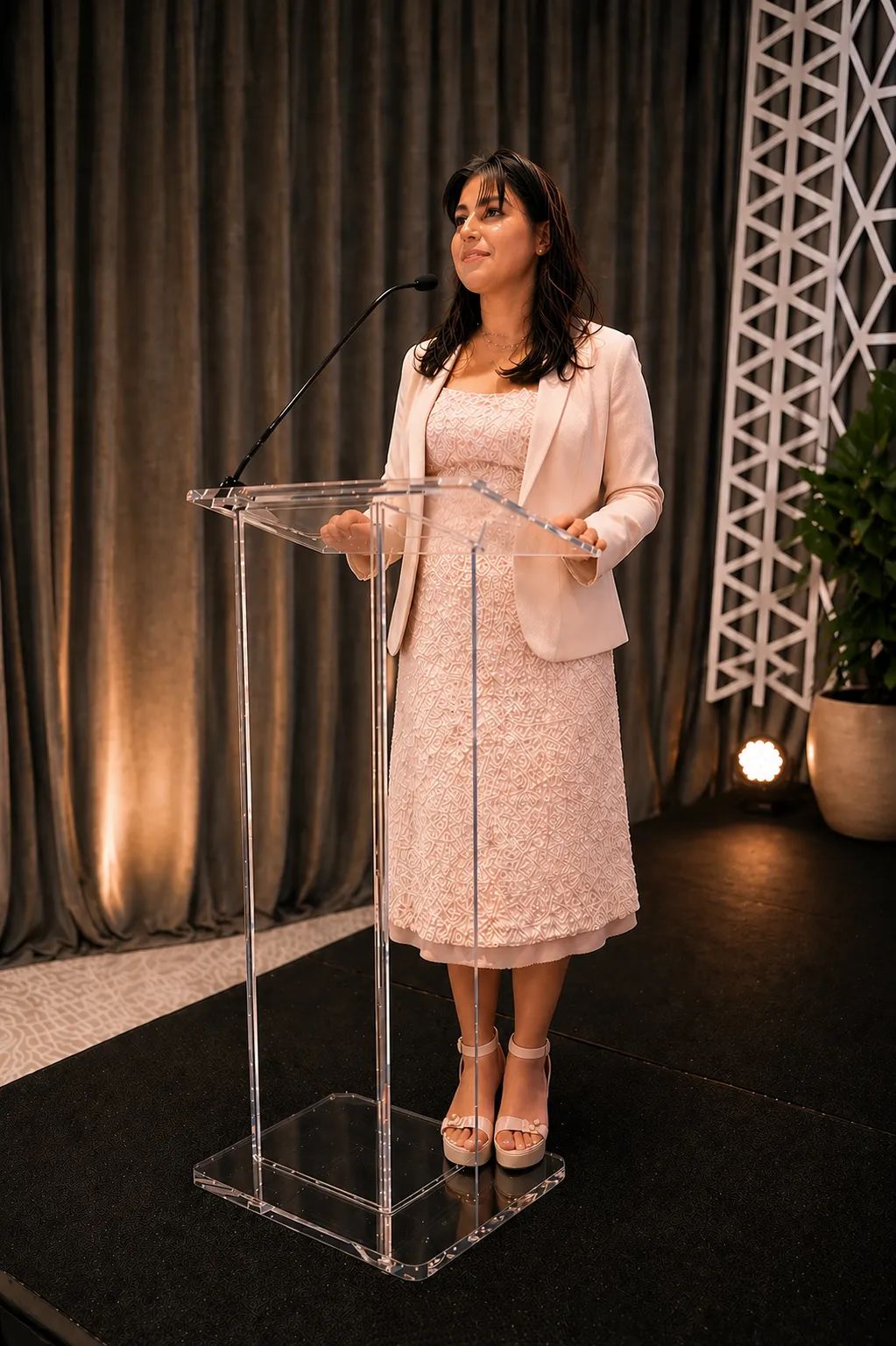
I speak to rooms of clinicians and administrators who have heard every version of the workflow talk. I don't give them another one. I give them the idea the industry has stopped talking about, and a framework they can put to work when they get home.
Spoken to healthcare audiences in the thousands. Named to the Florida 500 by Florida Trend.
Why this talk, why now
Most keynotes this season start on a discussion around the exam room. Mine starts before it.
Better outcomes don't start in the exam room. They start in the moments, conversations, decisions that come first. That is the talk. Clinicians recognize their own day in it. Administrators recognize where their people are actually burning out.

The idea
The first clinical decision in healthcare is made by someone who is not a clinician.
For decades the industry has spent billions on treatment, technology, and clinical expertise. We have been trying to fix outcomes from the wrong end. Healthcare doesn't begin when a clinician engages the patient. It begins before that, at the first question.
If the first question is not asked, or is asked the wrong way, everything downstream is already compromised. A 72-year-old having a stroke calls thinking she needs a prescription refill. If nobody asks her the right question, no amount of clinical excellence later that day reaches her in time.
On stage I call this the beginning of healthcare, and I hand the room The First Question Framework so they have something to do with the idea on Monday.
Rooms this talk was built for
Healthcare industry conferences
Association agendas that need a keynote with a point of view the room has not already heard from three other speakers this year.
CME sessions and grand rounds
Clinician-heavy rooms where the talk has to survive peer scrutiny and disclosure review, and still hand the audience a model they can use.
Global health nonprofits and NGOs
Program teams designing care in low and middle income countries, where the earliest moment of care is where the system either holds or breaks.
Health system leadership offsites
Executive rooms deciding where to invest next, ready to hear why the highest-value moment is upstream of what they are currently measuring.
The no-pitch promise
What this talk is, and what it is not
You are booking a speaker, not a vendor. Every program chair reading this has one fear, and it deserves a direct answer.
- No product pitch from the stage. Ever. I will sign your association's non-solicitation and disclosure language before the contract is signed.
- No thinly-disguised company case study. The talk is about the field, not the firm.
- A discovery call before the event so the examples fit your room, your clinical mix, and your theme.
- One reframe and one named framework the audience can quote in the hallway and use on Monday.
- The talk has to hold up for the nurse in the room and the CFO in the room, because both are there.
- I do the panel, the reception, the roundtable. I am not a fly-in, fly-out speaker.
What the audience walks out with
The First Question Framework, in five steps
Identify the first question the patient encounters
Before any clinician is involved, someone or something asks a patient a question. Name it, in your organization, today.
Design it with clinical logic, not customer service logic
The question must be built the way a clinician would ask it, because the answer determines every downstream decision.
Codify it into a repeatable decision tree
What every doctor and nurse learns in school, written down once, so it is not re-taught a hundred thousand times and forgotten in the moments that matter.
Measure whether it was actually asked and answered
A missed question is a missed diagnosis. If you are not measuring the question, you are not measuring the beginning of care.
Route based on the answer, not on staff availability
The patient goes where the clinical logic sends them. Not where the schedule happens to have room.
Formats I deliver
Keynote (45-60 min)
The keynote in full: healthcare begins before the clinician, The First Question Framework, and what leaders should invest in next.
- Association conferences
- Health system leadership events
CME / Grand Rounds session
Peer-review-ready session for clinician audiences, customized in advance with your CE committee.
- CME programs
- Academic medical centers
Panel and fireside chat
I hold my own with clinical leaders, policy voices, and operators. Bring the hard questions.
- Executive summits
- Advisory board convenings
Workshop (half-day)
Small-group working session applying The First Question Framework to your organization's actual first-contact process.
- Health system leadership teams
- NGO program teams
Stages and recognition
Who is speaking
Charu Raheja, PhD
Charu came to healthcare from the outside. She was a finance PhD and a finance professor at Vanderbilt before she co-founded Triage Logic in 2007, and she has spent the years since watching where the system actually breaks, from both sides of the bed.
At 41, Charu had a hemorrhagic stroke. She woke up unable to speak English and had to relearn her own life. What that experience gave her, and what she brings to the stage, is a perspective almost no other healthcare speaker has: she has seen the beginning of healthcare as the executive designing it and as the patient depending on it.
She is not on stage to sell you anything. She is on stage because the industry has stopped asking a question, and someone has to.
- PhD, finance academic before entering healthcare
- Former finance professor, Vanderbilt University
- Co-founder and CEO, Triage Logic (2007)
- Author, When My Brain Hit the Breaks
- Featured by American Heart Association Voices on stroke awareness and prevention
They assume healthcare begins when a nurse or a clinical person starts talking. And I'm saying, no, it begins before that.
What program chairs ask before they book
Will this turn into a pitch for your company?
No. Charu will sign your association's non-solicitation and disclosure language, and the talk is about the field, not the firm. If your CE or accreditation committee has specific language, send it with the invitation.
Does this apply to clinicians, or is it aimed at administrators?
Both, deliberately. The premise is that clinical outcomes are being decided by non-clinical hands. Clinicians recognize their own experience in it. Administrators recognize the operational problem they have been trying to solve from the wrong end.
Will Charu customize for our audience and theme?
Yes. Every keynote starts with a discovery call. Charu will tailor examples, terminology, and the framing to your specific room, whether that is a rural health association, a global NGO, or a health system leadership offsite.
Does this apply outside the United States?
Yes. The earliest moment of care is where resource-constrained systems break first. Charu regularly speaks to global health nonprofits and NGOs working in low and middle income countries.
What is Charu's connection to Triage Logic?
Charu co-founded Triage Logic in 2007 and remains its CEO. The company is her practitioner credential, not the subject of the talk. It is what earns her the right to say what she says on stage.
How far in advance should we invite her?
The earlier the better for customization, but send the invitation whenever you have it. Send the details below and Charu's team will respond within two business days.
Send the invitation
Tell us about the event
Share the basics and my team will respond within two business days. If you have a program brief, a theme deck, or non-solicitation language, mention it in the message and we will follow up for the file. For anything that isn't a speaking invitation, use the Connect page.
For speaking invitations only. Typical response within two business days.
Give your room the one idea they haven't heard yet.
If the conversation your agenda has been missing is where healthcare actually begins, send the invitation.
No pitch from the stage. Ever.